
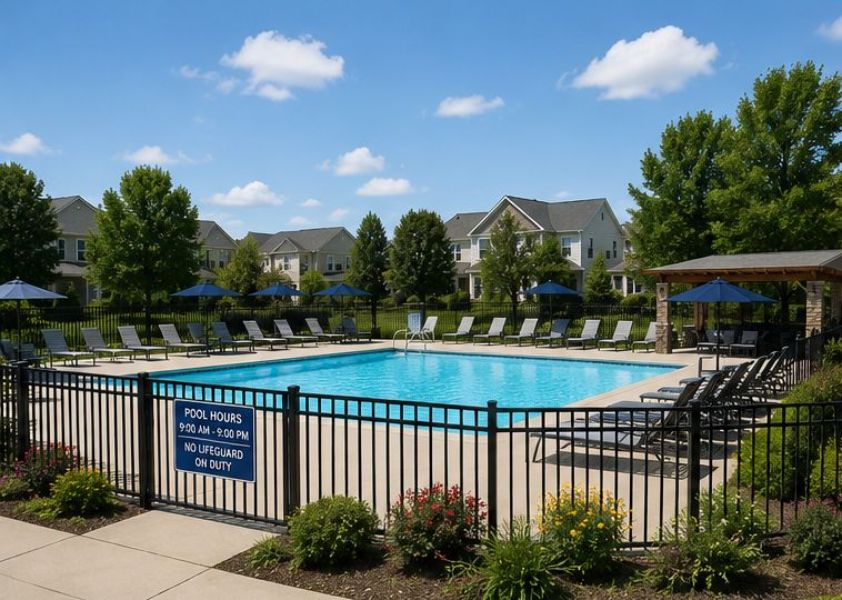
Minnesota HOA pool rules govern everything from guest policies and hours of operation to lifeguard requirements and chemical safety standards. Boards that establish clear, written rules before the season opens protect the association from liability, reduce neighbor conflicts, and give homeowners the consistent expectations they deserve.
Summer arrives fast in Minnesota. After months of snow and cold, residents are eager to use every outdoor amenity the association offers, and that enthusiasm is a good thing. But it also means that any gaps in your pool and amenity rules will surface immediately, often in the form of complaints, crowding disputes, or a safety incident that nobody wanted. Getting ahead of that with a solid ruleset is one of the best things a board can do before Memorial Day.
Why Pool and Amenity Rules Matter More Than Boards Often Realize
Many boards treat pool rules as a short checklist, post a laminated sign, and call it done. What they often underestimate is how much liability exposure an HOA carries when it operates a pool. Unlike a private backyard pool, an HOA pool is a shared facility used by dozens or hundreds of households, and Minnesota law treats that differently.
Under Minnesota Statutes Chapter 515B, the Common Interest Ownership Act, associations have a duty to maintain common elements in a safe and functional condition. That duty extends to amenities like pools, fitness rooms, playgrounds, and clubhouses. If a board fails to establish and enforce reasonable safety rules, and someone is injured, the association’s legal exposure grows significantly.
That is not meant to scare boards away from offering great amenities. It is meant to underscore why putting the work in now, before the season, pays off for everyone.
What Should Minnesota HOA Pool Rules Cover?
A thorough set of pool rules does more than list what is prohibited. It answers the questions homeowners will actually ask, sets fair expectations, and gives the board a clear basis for enforcement.
Hours of Operation
Define opening and closing times clearly, and make sure they are realistic for your community. Many Minnesota associations run pools from Memorial Day weekend through Labor Day. If your pool is unheated, consider building in flexibility around weather. State your rules for holiday weekends when usage spikes.
Guest Policies
One of the most common sources of pool conflicts is guests. A homeowner who brings eight people to the pool on a Saturday afternoon is not necessarily doing anything wrong, unless your rules say otherwise. Decide how many guests each household may bring at one time, whether guests must be accompanied by the resident, and whether guest fees apply.
Capacity Limits
Your pool contractor or the city may have already set a maximum bather load based on water volume and circulation. Know that number and include it in your rules. Boards that ignore capacity limits risk both safety problems and compliance issues with local health departments.
Reservation and Priority Systems
Some Minnesota HOAs with smaller pools or high demand have moved to reservation systems, especially for private events in the pool area. If you allow homeowners to reserve cabanas, the patio space, or the pool itself for gatherings, your rules should spell out how far in advance, how long, and how many times per season.
Alcohol and Food Policies
Minnesota does not prohibit alcohol at private HOA pools by default, but your governing documents or your insurance carrier may. Check both before drafting rules. If you allow alcohol, define where it is permitted and what containers are allowed. Glass near pool decks is a common prohibition for obvious reasons.
Children and Supervision Requirements
Many associations require children under a certain age, often 14 or 16, to be accompanied by an adult resident. This is a reasonable safety measure and worth including in writing. If your pool has a separate shallow area or splash zone, you may want different rules for each.
Lifeguard Requirements
Minnesota does not require HOA pools to have lifeguards, but if you choose not to have one, you should post clear “Swim at Your Own Risk” signage. If you do hire a lifeguard service, your rules should note their authority and what happens when the lifeguard is on break.
Amenity Rules Beyond the Pool
Pools get the most attention, but boards should extend the same level of care to every shared amenity.
Fitness Centers and Clubhouses
Indoor amenities need rules around hours, equipment reservations, cleaning expectations, and age restrictions. Post the rules inside the space, not just in the welcome packet homeowners received when they moved in.
Playgrounds and Sports Courts
Establish whether courts are first-come, first-served or reservable. Set rules about noise levels during early morning or evening hours. Minnesota’s warm-season evenings are long and beautiful, which means outdoor courts can see use well into the night without clear guidelines.
Common Green Spaces and Trails
If your community has walking paths, ponds, or open lawn areas, include rules about pet waste, organized gatherings, and any fire restrictions. Reviewing your HOA landscaping rules and responsibilities in Minnesota alongside your amenity rules helps make sure the two sets of expectations are consistent.
Enforcement: The Part Boards Skip Until They Wish They Hadn’t
Writing rules is the easier half of the job. Consistent enforcement is where many boards struggle.
We often see boards that have reasonable pool rules on paper but no clear process for what happens when someone violates them. The first time an issue comes up, the board scrambles to figure out who sends the warning letter, whether a fine applies, and how to handle a homeowner who pushes back. That reactive approach creates inconsistency, and inconsistency creates liability.
Build your enforcement process before the season starts. That means:
- Designating who monitors the pool area (a property manager, a volunteer, or a monitoring service)
- Deciding what a first violation looks like versus a repeat violation
- Confirming that your fine schedule is in your governing documents and was properly adopted
- Making sure homeowners received the rules in writing before the season opened
For the broader framework of how clear rules protect your community, the post why clear HOA rules actually make communities better is worth a read before you finalize your amenity policies.
Understanding your obligations under Minnesota HOA laws every board should know is equally important when you are drafting enforcement language.
A Real-World Scenario: When Guest Rules Were Left Vague
A townhome association in the western Twin Cities suburbs opened their pool each summer with a single laminated sign that said “Guests Welcome.” No limit, no policy, no process. For several years it was fine, mostly because the community was smaller and neighbors knew each other.
Then the association grew. New homeowners moved in, some of whom routinely brought six to ten guests on weekends. Longtime residents started complaining that the pool felt overcrowded and that the parking lot was full of cars they did not recognize. The board received a formal complaint from a homeowner who said she no longer felt comfortable using the pool she paid for.
The board called an emergency meeting and tried to retroactively impose a two-guest limit. Several homeowners pushed back, arguing that no such rule had existed when they moved in and that enforcement midseason was unfair.
The outcome was a contentious process that took two months to resolve, included a legal review of their governing documents, and left the board and homeowners frustrated with each other heading into fall.
The lesson: vague rules are not neutral. They create conflict later. Reviewing your HOA board member responsibilities before drafting any seasonal policies is a smart first step. Clear, written, pre-season rules are not bureaucratic overkill. They are the baseline of fairness.
Frequently Asked Questions
1. Does Minnesota law require HOA pools to have lifeguards?
Minnesota does not mandate lifeguards at privately operated HOA pools, but associations should check with their city or county health department, since local ordinances vary. Regardless, every HOA pool should carry adequate liability insurance and post clear signage if no lifeguard is on duty.
2. Can an HOA in Minnesota charge a separate fee for pool access?
Generally yes, if your governing documents allow for amenity fees or if the fee structure is properly adopted by the board. Before implementing any new fees, boards should review their declaration and consult with an HOA attorney to confirm authority.
3. What happens if a homeowner violates pool rules repeatedly?
Most HOA governing documents allow the board to suspend a homeowner’s amenity access privileges after repeated violations, following proper notice and a hearing process. The specific steps depend on your bylaws and rules, so document each violation and follow your fine schedule consistently.
4. How should the HOA communicate pool rules to homeowners?
Send a written notice at the start of the season by email and by postal mail, post rules physically at the pool entrance, and include them in any community portal or app your association uses. The goal is to ensure no homeowner can reasonably claim they did not know the rules.
5. Should pool rules be part of the governing documents or a standalone policy?
Most associations handle pool rules as a board-adopted policy rather than amending the declaration, which makes them easier to update each season. Your HOA attorney can confirm the right structure for your association, but the key is that rules are formally adopted, not just informally posted.
Final Thoughts
A well-run summer amenity season does not happen by accident. It happens because the board took time before Memorial Day to review the rules, close any gaps, and make sure homeowners knew what to expect. That preparation protects the association, protects residents, and makes the pool a place people actually enjoy.
If your board is working through your summer amenity policies and wants a second set of eyes, EPMI is here to help. We work with Minnesota HOA communities every day and understand the specific challenges that come with managing shared spaces in this climate. Reach out anytime to talk through what your community needs this season.