
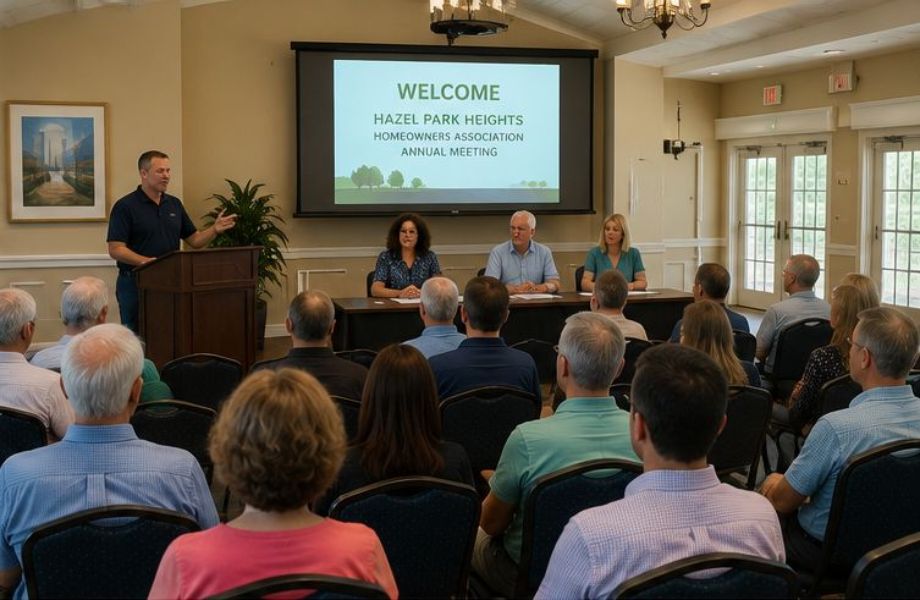
HOA board meeting best practices include preparing a written agenda in advance, following a consistent parliamentary procedure, limiting scope to board business, and ensuring homeowners have an opportunity to be heard. Well-run meetings build trust, produce better decisions, and protect the board from governance disputes down the road.
Picture the last time your board meeting ran long. Maybe it started twenty minutes late because not everyone had arrived, then spent forty-five minutes on a single parking complaint while three agenda items got tabled again. It happens more often than boards like to admit, and it is usually not because the board members are bad at their jobs. It is because the meeting itself was not structured to succeed.
What Minnesota Law Says About HOA Board Meetings
Before diving into best practices, it is worth grounding everything in the legal framework. Minnesota HOA boards operating under Chapter 515B of the Minnesota Statutes (the Common Interest Ownership Act) are required to hold meetings according to their governing documents, and those documents typically mirror certain statutory defaults.
Key requirements boards should know:
- Open meetings: Most regular board meetings must be open to homeowners, though executive sessions may be held for specific topics like litigation, personnel matters, or contract negotiations.
- Notice requirements: Boards typically must provide advance notice of meetings to homeowners. Review your bylaws for the specific timeline, which is often at least 10 days.
- Quorum: A meeting is not valid without quorum. Know your quorum requirement before scheduling. If your board often struggles to reach quorum, that is a governance issue worth addressing.
- Meeting minutes: Minutes must be kept, approved, and made available to homeowners upon request. Minutes are a legal record, not just a summary.
For a broader overview of the statutes that shape board governance, Minnesota HOA laws every board should know is a helpful starting point.
Before the Meeting: Preparation Is the Whole Game
One common mistake boards make is treating the meeting as the place where decisions get made from scratch. By the time you sit down, the groundwork for most decisions should already be laid.
Build a Written Agenda and Distribute It Early
An agenda is not just a courtesy. It is a governance tool. Distributing a written agenda at least a few days before the meeting gives board members time to review relevant materials, prepares homeowners who want to attend, and keeps the meeting on track.
A solid HOA board meeting agenda includes:
- Call to order and confirmation of quorum
- Approval of prior meeting minutes
- Homeowner open forum (time-limited, typically 15 to 30 minutes)
- Treasurer’s report and financial review
- Committee or manager reports
- Old business (unresolved items from prior meetings)
- New business (new motions and decisions)
- Executive session, if needed
- Adjournment
If an item does not fit on the agenda, it should wait for the next meeting unless it is genuinely urgent. Boards that allow any homeowner or board member to add items in real time lose control of the meeting quickly.
Review Financial Documents in Advance
Boards make better financial decisions when they have read the reports before sitting down. Ask your property manager or treasurer to distribute the financial summary, accounts receivable aging report, and any pending invoices at least 48 hours ahead. Understanding HOA financial reports before the meeting means less time explaining numbers and more time making decisions.
Prepare Supporting Materials for Any New Business Items
If the board is voting on a contract, a rule change, or a capital project, the relevant documents, bids, or summaries should be attached to the agenda. Board members who walk into a meeting and see a vendor bid for the first time will struggle to make an informed decision.
During the Meeting: Structure and Discipline
Follow Parliamentary Procedure (Without Turning It Into a Law School Exam)
Most HOA boards use Robert’s Rules of Order or a simplified version. You do not need to be a parliamentary expert, but you do need a few basics: motions require a second, discussion happens before a vote, votes are recorded in the minutes. These structures exist because they make decision-making clear and defensible.
Run a Time-Limited Homeowner Forum
Homeowners have a right to be heard, but a board meeting is not a town hall. Set a clear time limit for the open forum, typically 15 to 30 minutes total, and establish a per-speaker limit of two to three minutes. This is not about shutting people out. It is about creating a predictable structure that everyone can rely on.
We often see boards that let the homeowner forum run without limits end up with meetings that go two or three hours. That exhausts board members, discourages future attendance, and means the actual business of the association gets rushed or tabled.
Keep Decisions Documented
Every motion should be stated clearly, seconded, and voted on with a recorded outcome. “We agreed we should look into that” is not a motion. “I move to authorize the board president to solicit three bids for parking lot resealing, not to exceed $500 for this process, with results presented at the August meeting” is. The difference matters when you revisit a decision three months later.
Handle Difficult Homeowners Gracefully
Boards occasionally face homeowners who become confrontational or monopolize time. The board president has authority to redirect, pause, and if necessary, end a homeowner’s speaking time. Do so calmly and consistently. If a homeowner’s concern is legitimate, acknowledge it and commit to a written follow-up. If it is outside the board’s authority to address, say so clearly.
For more on managing conflict as it relates to homeowner disputes, HOA dispute resolution in Minnesota covers approaches that translate directly to meeting management.
After the Meeting: Follow-Through Is What Makes the Meeting Matter
Get Minutes Drafted and Approved Promptly
Minutes should be drafted within a few days of the meeting, while details are still fresh. They do not need to capture every word spoken. They need to capture every motion made, vote taken, and action item assigned. Approved minutes become the official record and should be stored securely and made available to homeowners.
Assign Action Items With Owners and Deadlines
Every decision that requires follow-up should have a named owner and a deadline. “We’ll look into it” is not an action item. “Maria will contact the landscaping vendor by July 10 and report back at the August meeting” is. Boards that consistently follow through on commitments earn homeowner trust. Boards that routinely table and forget things do not.
Communicate Key Outcomes to Homeowners
You do not need to publish full minutes immediately after every meeting, but a brief summary of decisions made helps homeowners who could not attend feel informed and reduces rumors. A short email or a post on your community portal goes a long way. Effective communication after meetings is part of a broader communication strategy, which we cover in depth in our post on HOA communication best practices.
A Real-World Scenario: The Board That Started Over
A single-family HOA in the northern Twin Cities metro had fallen into a pattern where board meetings lasted two to three hours, homeowners dominated the first ninety minutes with complaints, and the board often left without formally voting on anything. Minutes were rarely drafted, and action items from prior meetings were regularly forgotten.
When a new board president was elected, she asked EPMI to help restructure the process. They implemented a written agenda distributed three days in advance, a strict thirty-minute homeowner forum with a two-minute-per-speaker limit, and a tracking sheet for open action items reviewed at the start of every meeting.
Within two meetings, average meeting duration dropped to under seventy-five minutes. Homeowner attendance actually increased because people knew their time would be respected. The board started completing its agenda consistently, and minutes were approved within two weeks of every meeting.
The lesson: structure is not bureaucracy. It is respect for everyone’s time, including the homeowners who show up.
Frequently Asked Questions
1. How often should an HOA board meet in Minnesota?
Most HOA governing documents require a minimum number of annual board meetings, often monthly or quarterly, but the right frequency depends on the size and complexity of your community. Larger associations with more active maintenance and financial decisions generally benefit from monthly meetings.
2. Can homeowners vote at board meetings?
Regular board meetings are for board members to conduct association business. Homeowners have the right to attend and speak during the open forum, but voting rights belong to the board on day-to-day decisions. Matters requiring a homeowner vote, such as amendments to governing documents or election of board members, are typically handled at an annual or special meeting of the membership.
3. Are HOA board meetings required to be open to all homeowners in Minnesota?
Generally yes, under most governing documents and the Minnesota Common Interest Ownership Act. Executive sessions, which cover litigation, personnel, or contract negotiations, are an exception. Boards should notify homeowners of meeting times and locations as required by their bylaws.
4. What should the board do if no quorum is reached?
Without quorum, the board cannot take official action. The meeting can be called to order, attendance noted, and the meeting adjourned and rescheduled. Boards that frequently struggle with quorum should examine whether their quorum threshold is appropriate for the size of the board and whether meeting scheduling is working for members.
5. How long should board meeting minutes be?
Minutes are a record of decisions, not a transcript of discussion. A typical meeting’s minutes should cover attendance, any actions taken, motions made, vote outcomes, and assigned action items. Length will vary but most meeting minutes can be summarized in two to four pages for an average monthly board meeting.
Final Thoughts
Well-run board meetings are one of the most visible signs of a healthy HOA. When homeowners see that their board meets consistently, makes decisions clearly, and follows through, trust in the association grows. When meetings are chaotic or unproductive, that erosion of trust is hard to reverse.
If your board is looking for support in structuring meetings, managing agendas, or handling the administrative side of governance, EPMI works with Minnesota HOA communities to build the systems that make good governance sustainable. We are happy to talk through what better meetings could look like for your community.