
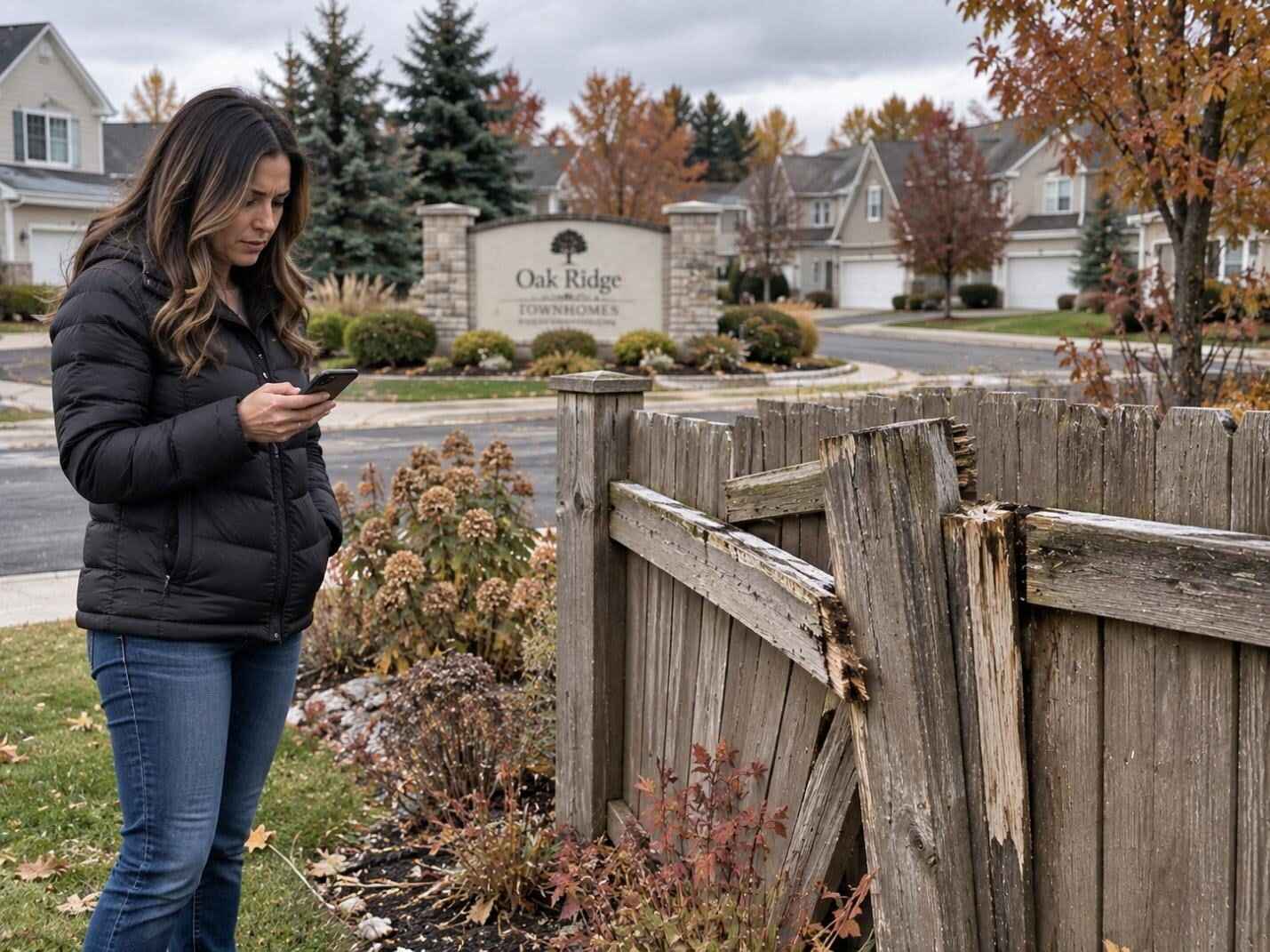
HOA homeowner damage responsibility in Minnesota is one of the most frequently misunderstood topics in community association governance. The short answer is yes: a Minnesota HOA can generally require a homeowner to pay for damage they caused to common areas or another unit, but the process for doing so involves governing documents, state law, and often insurance before a board can issue a charge.
If you’re a board member trying to figure out how to handle a situation where a homeowner clearly caused damage, or if you’re a homeowner who just received a repair bill from the association, this guide explains how the responsibility determination actually works in Minnesota.
The Foundation: What Your Governing Documents Say
Before anything else, a Minnesota HOA board’s authority to charge a homeowner for damage flows from the association’s governing documents. The Declaration, Bylaws, and Rules and Regulations define what the association maintains, what the homeowner is responsible for, and what happens when one party’s negligence or intentional act causes damage.
The Maintenance Responsibility Matrix
Most declarations distinguish between three categories of property: common elements (maintained by the HOA), limited common elements (used exclusively by one owner but often maintained by the HOA), and the unit interior (the homeowner’s responsibility). When damage crosses these boundaries, things get complicated.
For example, if a homeowner’s washing machine supply line fails and water flows down into a neighbor’s unit, the damaged unit is a common-element boundary question and often involves the HOA’s insurance. But if the homeowner was negligent in maintaining the supply line, the association may have a right to recover repair costs from that homeowner.
Understanding who is responsible for HOA repairs in Minnesota is the necessary starting point for any damage responsibility conversation, because the governing documents and the nature of the property being repaired determine everything that follows.
When Documents Explicitly Assign Responsibility for Owner-Caused Damage
Many well-drafted declarations include language that explicitly holds a homeowner responsible for the cost of repairs to common elements when that damage results from the homeowner’s negligence, intentional act, or failure to maintain their unit. If your declaration includes this language, enforcing it is significantly more straightforward. The board should document the damage, get a repair estimate, notify the homeowner in writing, and follow the collection process if the homeowner disputes or ignores the charge.
If your documents are silent or ambiguous on this point, the board is in a more difficult position and may need legal guidance before issuing a charge.
Minnesota Law and HOA Damage Recovery
Minnesota HOA law, primarily through the Minnesota Common Interest Ownership Act (MCIOA) for applicable associations, provides a framework that supports owner accountability for damage, but it also requires that associations follow due process before charging homeowners.
Boards cannot simply send a homeowner a bill and then lien the property if it goes unpaid. There must be a documented process, typically outlined in the collection policy, that gives the homeowner notice, an opportunity to respond, and a defined path for dispute resolution. Skipping these steps exposes the board to legal challenge even when the underlying damage claim is completely valid.
Minnesota HOA laws that every board should know provides a broader overview of the statutory framework that governs how Minnesota associations can assess and collect charges, including damage reimbursement charges.
The Role of Insurance in Damage Responsibility
This is where many boards and homeowners get confused, because insurance can complicate what feels like a simple “you broke it, you fix it” situation.
The Association’s Master Policy
The HOA’s master insurance policy typically covers damage to common elements and, depending on the policy type, may also cover unit interiors to varying degrees. When a covered loss occurs, the association generally files a claim with its insurer. The insurer pays for repairs, minus the deductible.
Here’s where homeowner responsibility can come back into play: if your association’s master policy deductible is, for example, $10,000, and the damage was caused by a homeowner’s negligence, many declarations allow the association to charge that homeowner for the deductible amount. This is sometimes called a deductible assessment, and it’s one of the most common situations where homeowners receive an unexpected bill from the HOA.
Understanding HOA insurance and what Minnesota associations should know explains how master policies, unit owner policies, and deductible responsibilities interact in ways that boards and homeowners often don’t anticipate until a claim arises.
Subrogation: When the HOA’s Insurer Goes After the Homeowner
Even when the association’s insurance pays for a loss caused by a homeowner’s negligence, the insurer may exercise its subrogation rights, meaning it pursues reimbursement directly from the responsible homeowner (or the homeowner’s insurer). This can come as a surprise to homeowners who assumed that because the association’s insurance paid, the matter was closed.
Homeowners in Minnesota HOA communities should carry their own HO-6 unit owner policy, which provides liability coverage that can protect them in exactly this kind of situation.
A Real-World Scenario: The Deck Repair Dispute
A single-family HOA in the northern suburbs had a homeowner who modified their deck without going through the architectural review committee. The modifications weren’t structurally sound, and during a winter storm, a section of the deck partially collapsed against a shared fence that the association maintained. The fence repair cost just over $3,800.
The board reviewed the declaration and found clear language holding homeowners responsible for damage to common elements caused by the homeowner’s negligence or unauthorized alterations. They sent a written notice to the homeowner itemizing the repair cost, explaining the relevant declaration language, and providing a 30-day response window.
The homeowner disputed responsibility and requested a hearing before the board. The board held the hearing, reviewed the evidence (including the permit records showing no approved modification), and upheld the charge. The homeowner ultimately paid after the board explained that the next step was a formal lien under the association’s collection policy.
The lesson here is that the board’s process mattered as much as the underlying facts. Because they followed a documented, fair process, their position was defensible throughout.
Following the Correct Collection Process
If a homeowner refuses to pay a legitimate damage charge, the association typically has the right to treat it as an unpaid assessment and pursue collection through the same process used for unpaid dues. HOA collection policies in Minnesota and how they protect boards walks through the mechanics of that process, including the notice requirements and lien rights that apply.
When Homeowners Dispute a Damage Charge
One common mistake boards make is treating a homeowner’s dispute as an obstacle rather than a process step. Minnesota associations generally have a dispute resolution obligation, and boards that skip directly from “you owe us money” to “we’re liening your property” are vulnerable to legal challenge regardless of how legitimate the underlying claim is.
If a homeowner disputes a damage charge, the board should provide a formal hearing or review process as outlined in the governing documents. If the dispute can’t be resolved internally, HOA dispute resolution in Minnesota explains the options available, including mediation and the processes available under Minnesota law.
Documenting every step of the process, from the initial damage report through the final resolution, is essential. If the matter ever escalates to court or a MCIOA complaint, the association’s documentation is its primary defense.
What Boards Should Document When Damage Occurs
When a homeowner-caused damage situation arises, boards should move quickly to document the following before memories fade and conditions change:
- Photographs and video of the damage, dated and time-stamped
- Written reports from any vendor, contractor, or association manager who assessed the damage
- A written timeline of events, including when the damage was discovered and by whom
- Any prior notices or warnings given to the homeowner about the condition that caused the damage
- The specific governing document language that assigns responsibility
This documentation package is the foundation of any damage recovery action, whether it’s handled informally, through the collection process, or in litigation.
Frequently Asked Questions
1. Can a Minnesota HOA charge a homeowner for damaging a common area?
Yes, if the governing documents include language assigning responsibility for owner-caused damage. Most well-drafted declarations do include this language. The association must still follow a proper notice and hearing process before the charge can be collected or secured by a lien against the property.
2. What if the homeowner claims their insurance should cover it?
A homeowner’s personal liability coverage under their HO-6 policy may cover damage they caused to common areas or neighboring units. If the homeowner has coverage, they should file a claim with their own insurer, which can then coordinate with the association. However, if the homeowner doesn’t have coverage or their insurer denies the claim, the homeowner remains personally responsible for the damage they caused.
3. Can the HOA lien a homeowner’s property for unpaid damage charges?
In most cases, yes. Under Minnesota law, associations that are governed by MCIOA can treat unpaid assessments, which typically include damage reimbursement charges that have been properly levied, as liens against the property. This requires following the statutory notice and collection procedures. Boards should consult with HOA legal counsel before filing a lien to ensure all procedural requirements have been met.
4. What is a deductible assessment and when can an HOA charge one?
A deductible assessment is a charge the HOA passes to the homeowner who caused a loss, in an amount equal to the association’s insurance deductible for the resulting claim. Many Minnesota declarations explicitly authorize this charge. Even without explicit language, some associations have enforced deductible assessments under their general damage responsibility provisions, though explicit language is much safer. Boards should review their declaration language and consult legal counsel if unclear.
5. Does the HOA have to prove the homeowner was at fault before charging them?
The standard for owner-caused damage charges is typically negligence or intentional conduct, not strict liability. Boards need to be able to document why they believe the homeowner was responsible for the damage. Photographic evidence, contractor reports, and any prior notices to the homeowner about a condition they failed to correct all help establish the factual basis for the charge. Boards that issue damage charges without any supporting documentation are vulnerable to successful disputes.
Final Thoughts
HOA homeowner damage responsibility in Minnesota isn’t always a clean or comfortable conversation, but boards that approach it with clear documentation, a fair process, and a solid understanding of their governing documents are in a strong position. The goal isn’t to punish homeowners but to ensure the association has the resources to maintain the community for everyone.
If your board is navigating a complex damage situation and isn’t sure how your governing documents apply, or what process you’re required to follow, EPMI can help you think through the steps before you take action. Getting the process right from the beginning protects both the association and the homeowner, and it keeps manageable disputes from becoming expensive legal conflicts.