
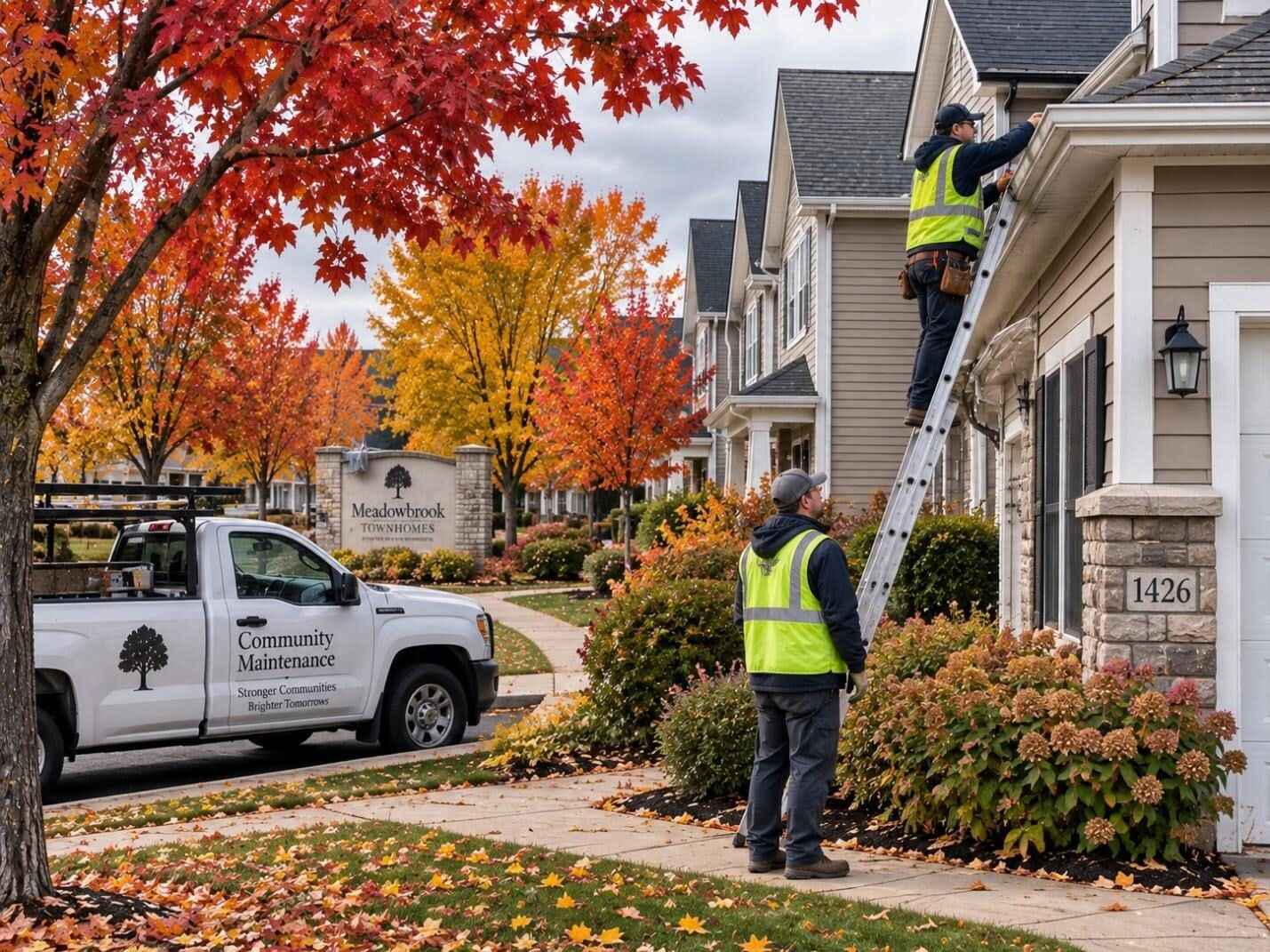
An HOA fall maintenance checklist tailored for Minnesota communities is one of the most practical tools a board can use heading into September and October. Minnesota’s freeze season doesn’t wait for boards to catch up, and the tasks your association completes (or skips) in fall will determine how well the community weathers the coming months and how much emergency spending you’re managing in spring.
This checklist is built around the specific conditions Minnesota HOA communities face: hard winters, active freeze-thaw cycles, and significant common-area infrastructure that needs to be winterized, inspected, and prepared before the first hard frost.
Why Fall Is the Critical Window for Minnesota HOA Maintenance
By the time snow is on the ground in Minnesota, your window for many critical exterior maintenance tasks has closed. Roofing work, sealcoating, caulking, gutter cleaning, and irrigation winterization all have weather dependencies that make them impossible or inadvisable once temperatures drop consistently below freezing. And unlike spring maintenance, which corrects what winter damaged, fall maintenance is genuinely preventive. Dollars spent in fall reliably reduce emergency spending in winter and spring.
Boards that skip fall maintenance cycles often discover in March and April that they’re looking at problems that were avoidable. This is one of the most direct paths to deferred maintenance accumulating faster than reserves can absorb it. The real cost of HOA deferred maintenance in Minnesota explains how those postponed fall tasks compound into much larger repair bills by the time conditions allow work to resume.
The Full HOA Fall Maintenance Checklist for Minnesota Communities
Roofing and Building Envelope
- Inspect all roofs for missing, damaged, or curling shingles, and for flashing failures around chimneys, vents, and skylights. Address any issues before freeze season locks them in.
- Check soffits, fascia, and eaves for deterioration, pest access points, or moisture damage.
- Inspect all exterior caulking around windows, doors, and penetrations and reapply wherever seals have cracked or separated.
- Clean all gutters and downspouts completely after leaves have fallen. Clogged gutters in Minnesota create ice dams that cause significant and expensive damage.
- Confirm downspout extensions are directing water away from building foundations.
Pavement and Hardscaping
- Inspect all parking lots, driveways, and walkways for crack damage and arrange for crack sealing before sustained freezing temperatures. This is one of the highest-return fall maintenance tasks for Minnesota communities.
- Check curbing, speed bumps, and any concrete edging for spalling or heaving that may have developed over the summer.
- Confirm that stormwater drains and catch basins are clear of debris and functioning.
- Review trip hazards on sidewalks and walkways. Fall is the last chance to arrange concrete lifting or patching before the ground freezes.
Irrigation and Water Systems
- Winterize all irrigation systems. This means complete blowout of all irrigation lines before the first freeze. A line that isn’t fully blown out will rupture, and the repairs are expensive.
- Shut off and drain all outdoor water spigots and hose bibs serving common areas.
- If the community has any water features, fountains, or ponds, confirm winterization procedures are scheduled with the appropriate vendor.
Common Area Utilities and Mechanical Systems
- Inspect and service all boilers, furnaces, and HVAC systems serving common buildings before demand increases. Filters, belts, and combustion systems should all be addressed now, not in January when a failure is an emergency.
- Test all exterior lighting and replace burned bulbs. With shorter days arriving, lighting in parking lots, walkways, and entryways becomes a safety issue.
- Inspect and test any emergency generators, sump pumps, or backup systems.
- Check common area fire suppression systems for any required seasonal servicing.
Pools, Playgrounds, and Amenities
- Close, winterize, and secure all pools and water amenities. Minnesota pool closings should be complete by mid-September in most years.
- Inspect playground equipment for any damaged components, loose hardware, or surfacing issues. Address safety items before equipment is buried under snow where problems become harder to detect.
- Store or anchor any outdoor furniture, grills, or portable amenities that will be damaged by snow and ice.
- Inspect sports courts and amenity areas for surface damage and document conditions for spring planning.
Landscaping and Grounds
- Complete any final turf treatments, including aeration, overseeding, and fertilization appropriate for Minnesota fall care.
- Cut back perennials and remove annuals from common area beds.
- Confirm that any trees or large shrubs adjacent to buildings, parking areas, or power lines are inspected and any dead or hazardous limbs are removed before wind and ice loading arrives.
- Finalize and confirm your snow removal contract. Verify scope, pricing, trigger depth, and vendor equipment before the season starts. One common mistake is discovering coverage gaps in the snow removal contract only after the first significant storm reveals them.
Common HOA maintenance mistakes that Minnesota communities should avoid includes several contract and vendor management issues that often surface during seasonal transitions. It’s worth a read as you’re finalizing your fall service agreements.
Vendor and Contract Review
- Confirm all winter service contracts are signed before the first storm: snow plowing, salting, and sidewalk clearing.
- Verify that all current-season vendors have completed their outstanding work before the season closes.
- Review vendor performance from the past season and make decisions about any contracts you’re not renewing before winter. Finding a replacement landscaping or maintenance vendor in November is harder than doing it in September.
If you’ve had vendor performance issues this season, what to do when HOA vendors aren’t performing in Minnesota provides a practical approach to documenting issues and managing transitions.
A Real-World Scenario: When Gutter Cleaning Gets Skipped
A condominium association in the south metro skipped its scheduled fall gutter cleaning two years in a row because the board felt the gutters “didn’t look that bad” from the ground. The following January, ice dams formed along the rear roofline of the largest building and forced water under the shingles. Water penetrated the top floor of three units before anyone noticed.
Remediation required ice dam removal, emergency tarping, interior water extraction, drywall replacement, and partial roof repair on those sections. Total cost: significantly more than five years of annual gutter cleaning contracts would have cost. The association also had to navigate a complex insurance claim and two homeowners who were displaced for several weeks.
The board’s decision was made in good faith. They simply didn’t have a clear, documented inspection protocol that required ground-level visual assessment plus a hands-on vendor inspection. Building a checklist like this one into the board’s annual calendar is exactly how that outcome gets prevented.
Connecting Fall Maintenance to Your Winter Readiness Plan
Fall maintenance doesn’t end when the checklist is complete. It transitions into your winter readiness posture. That means knowing where your sand and salt stockpiles are, confirming your vendors have your emergency contact information, and ensuring the board has a protocol for emergency repair authorization so the property manager or board president can mobilize a vendor without waiting for a quorum meeting in a blizzard.
Winter HOA best practices for Minnesota communities picks up where this checklist leaves off, covering the ongoing practices that protect Minnesota HOA communities throughout the winter season.
And once spring arrives, the cycle starts again. The spring HOA maintenance checklist for Minnesota communities will help you assess what winter left behind and prioritize the recovery work that comes with every thaw.
Timing Your Fall Tasks: A Minnesota-Specific Calendar
Minnesota’s fall maintenance window is narrower than many board members realize.
September (now): Roof inspections, pavement crack sealing, final pool closure, irrigation blowout scheduling, vendor contract review and signing.
Early October: Gutter cleaning (once leaf drop is substantially complete), exterior lighting check, HVAC servicing, playground equipment inspection and closure.
Mid-October (target completion): Irrigation blowout must be complete. Sealcoating window is effectively closed once nighttime temperatures drop below 50 degrees consistently.
Late October through November: Tree and shrub work, final grounds cleanup, emergency protocol confirmation.
Planning backward from these windows will help your board schedule vendors far enough in advance. Many Minnesota contractors are fully booked for fall irrigation blowouts and gutter cleaning by early September. How Minnesota weather impacts HOA budgets and how to plan for it covers the budget planning side of seasonal preparation and is worth reviewing alongside this checklist.
Frequently Asked Questions
1. When should a Minnesota HOA start fall maintenance?
Most Minnesota HOA communities should begin fall maintenance planning in August and start executing tasks in September. Irrigation blowouts and pavement sealing need to be completed before nighttime temperatures drop below freezing consistently, which can happen as early as mid-October in some years. Gutter cleaning is most effective after leaves have fully dropped, typically mid-to-late October depending on the region, but vendors should be scheduled in September.
2. Does the HOA or the homeowner handle winterization tasks for individual units?
This depends on the governing documents and the type of community. In condominium communities, the HOA typically handles exterior winterization, while homeowners handle unit interiors including their own HVAC filters and any unit-specific plumbing. In townhome or single-family HOA communities, homeowners usually handle unit-level winterization. Boards should clarify responsibilities in writing each fall to avoid disputes when something fails.
3. What happens if we skip irrigation winterization and the pipes freeze?I
Irrigation pipe damage from inadequate winterization is expensive to repair and is typically not covered by the HOA’s master insurance policy if the damage resulted from deferred or neglected maintenance. The association may need to pay repair costs out of reserves or pursue a special assessment. More importantly, the repair can’t happen until ground thaws, meaning the irrigation system may not be functional at the start of the following season. Irrigation blowout is one of the highest-consequence fall tasks and should never be deferred.
4. How should we handle a vendor who can’t complete fall work before the weather closes?
Document the situation in writing as soon as it becomes clear the vendor won’t meet the deadline. Determine whether the remaining work creates a safety or liability risk that requires finding a replacement vendor immediately, or whether it’s a lower-priority item that can be rescheduled for earliest spring. Update your maintenance log to reflect the deferred work, note the reason, and build it into your spring checklist. Avoid letting deferred fall work simply disappear from the radar.
5. Is fall the right time to review and renegotiate vendor contracts?
Yes, fall is an ideal time to evaluate vendor performance before renewing contracts for the next season. You have a full season of performance data, and vendors are often more flexible on terms in September and October than they will be in the spring when demand increases. Review vendor performance against contract specifications, document any deficiencies, and make renewal or replacement decisions before the current contract term ends.
Final Thoughts
Fall maintenance in Minnesota is not optional, and the communities that treat it as a genuine priority year after year are the ones that avoid the emergency calls, the unexpected special assessments, and the difficult board meetings that come with deferred problems. This checklist gives your board a solid framework to work from, but the real key is building fall maintenance into your annual calendar as a non-negotiable standing priority.
If your HOA doesn’t have a professional management partner helping coordinate seasonal vendor scheduling, documentation, and inspection protocols, that’s a gap worth addressing before another winter arrives. EPMI works with Minnesota HOA communities across the metro and greater Minnesota to make seasonal maintenance predictable, well-documented, and budget-aligned. Reach out to talk through what a management partnership could look like for your community.