
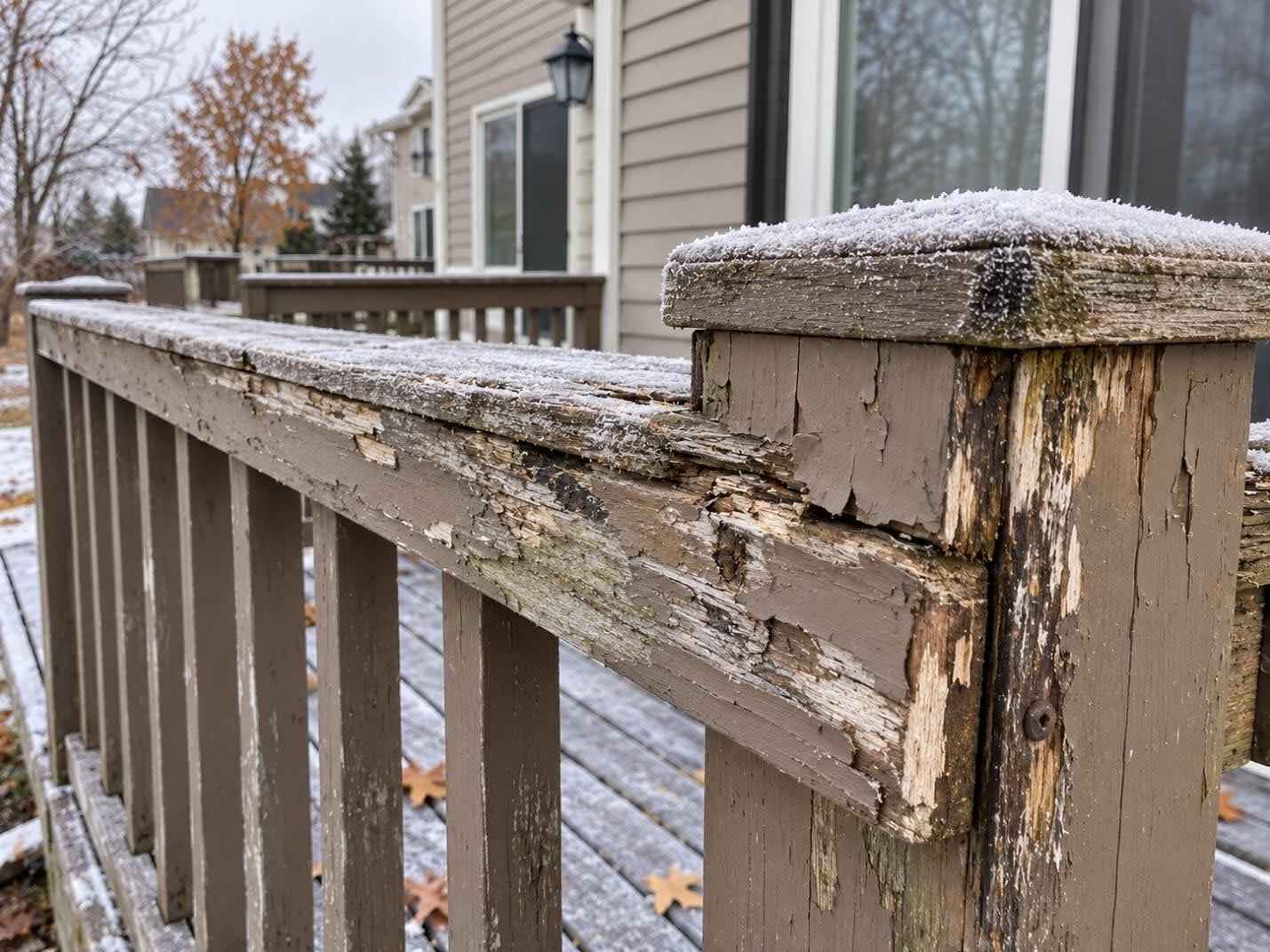
HOA deferred maintenance in Minnesota is one of the most predictable ways a community ends up facing a special assessment, a lawsuit, or a sudden capital crisis. When a board repeatedly pushes repair decisions to the next budget cycle, small problems compound into expensive emergencies, and the entire community pays the price.
Boards usually defer maintenance for understandable reasons: dues are already tight, owners are resistant to increases, and the roof or the parking lot looks like it can wait one more year. But “one more year” has a way of arriving much faster than anyone planned, and in Minnesota, our climate gives deferred problems very little grace.
Why Minnesota Boards Defer Maintenance in the First Place
Every board that ends up in a deferred maintenance crisis got there gradually. Rarely does a board vote to neglect its properties. Instead, maintenance gets deferred through a series of individually reasonable-sounding decisions.
Budget Pressure Is the Most Common Driver
When the annual budget is already stretching to cover landscaping, snow removal, and insurance premiums, a $40,000 parking lot repair feels impossible to approve. So the board tables it. The next year, the same pressure exists. By year three, that $40,000 repair is now a $90,000 replacement because the base has failed.
Minnesota communities face particular budget pressure because our seasonal maintenance costs are genuinely high. Snow removal contracts, freeze-thaw crack repairs, and heating system maintenance for common areas all compete for the same reserve dollars that should be accumulating for long-term capital replacements.
Boards Underestimate How Fast Conditions Deteriorate
What looks like a cosmetic issue in spring can become a structural problem by the following spring. A small roof leak that gets patched rather than properly repaired allows water to wick into the substrate through dozens of freeze-thaw cycles. A parking lot with surface cracking that isn’t sealed before October will have base failure by April.
We often see boards underestimate this acceleration because they’re evaluating conditions in summer when everything looks its best, and deferring decisions until after winter when the damage has already compounded.
The Real Costs That Boards Don’t Anticipate
Exponential Repair Costs
The most direct cost of deferred maintenance is the repair bill itself, which tends to grow faster than inflation. Industry data and reserve study professionals consistently show that deferred capital projects cost two to four times more when finally addressed than they would have cost at the originally scheduled replacement interval. For a Minnesota HOA with aging infrastructure, this math can turn a manageable reserve drawdown into a special assessment crisis.
Understanding your reserve fund position is essential here. If your community hasn’t done a recent reserve study, boards should review what every Minnesota board needs to know about HOA reserve studies before committing to another deferral. A reserve study shows exactly how much deferral you can absorb and where you’re already overextended.
Liability Exposure
Deferred maintenance isn’t just a financial problem. It’s a legal one. When a homeowner trips on a cracked walkway that the board knew about, or when water intrusion damages a unit because a roof repair was deferred two seasons in a row, the association’s liability exposure is significant. Minnesota courts and insurance carriers look unfavorably on documented knowledge of a defect followed by inaction.
If your HOA insurance policy has exclusions for deferred maintenance, and many do, the association may find itself without coverage precisely when it needs it most. Understanding what Minnesota HOA insurance actually covers is a critical companion to any maintenance planning conversation.
Property Value Decline
Buyers’ agents in Minnesota notice deferred maintenance quickly during walkthroughs. Peeling exterior paint, cracked driveways, aging roofs, and worn common areas all signal to prospective buyers that the HOA may be financially stressed. This perception drives down sale prices and can make units harder to sell, which in turn creates more homeowner dissatisfaction and resistance to dues increases. It becomes a self-reinforcing cycle.
Special Assessment Risk
When deferred maintenance finally forces emergency action, the money has to come from somewhere. If reserves are inadequate, which they usually are when a community has been deferring systematically, the board faces a special assessment. The warning signs that an HOA’s finances are heading toward trouble often include exactly this pattern: underfunded reserves plus a growing deferred maintenance list.
Special assessments are disruptive, create homeowner conflict, and often arrive at the worst possible time for individual owners. They are also almost always avoidable with consistent planning.
A Real-World Scenario: The Parking Lot That Waited Too Long
A townhome association in the western Twin Cities suburbs had a parking lot that appeared on their reserve study for resurfacing in 2021. The board deferred the project that year because dues had just increased and they wanted to give homeowners a break. In 2022, they deferred again because they were managing a contentious landscaping contract dispute that consumed most of the board’s attention. In 2023, a vendor gave them a crack-filling estimate and they approved that instead as a “maintenance measure.”
By 2024, the crack-fill had failed and water infiltration had compromised the base in three sections. The original resurfacing project had grown into a full reconstruction of those sections plus resurfacing for the rest, at nearly three times the original estimate. The board had to levy a special assessment because reserves had not been funded at the level the reserve study recommended.
The lesson isn’t that the board was negligent. They were trying to balance competing pressures responsibly. The lesson is that deferring a scheduled capital project doesn’t eliminate the cost. It multiplies it.
What Boards Should Do Instead
Use Your Reserve Study as a Decision-Making Tool
A reserve study is only useful if the board actually refers to it when making budget and deferral decisions. One common mistake is treating the reserve study as a document you commission every few years and then file away. It should be the foundation of your annual budget conversation.
If your reserve study recommends resurfacing in Year 3, and the board is considering deferring to Year 5, the study can show you exactly what that deferral costs in accelerated deterioration and catch-up funding. Understanding HOA reserve funds and why they matter is the place to start if your board hasn’t made this connection yet.
Prioritize by Consequence, Not by Cost
Not all deferred maintenance carries equal risk. A deferred bench replacement is very different from a deferred roof repair. Boards should triage their deferred list by asking what happens if this is deferred one more year, not just what it costs to fix it today. Safety items, water-intrusion risks, and anything that touches the building envelope should be at the top of the priority list, especially heading into a Minnesota winter.
Communicate Honestly With Homeowners
Boards sometimes defer maintenance because they’re afraid of homeowner reaction to a dues increase or special assessment. In our experience, homeowners respond far worse to a surprise emergency assessment than they do to a clearly explained, well-timed dues increase tied to a specific project.
Be transparent. Show homeowners the reserve study data. Explain what happens to costs when projects are deferred. Most owners, when they understand the math, prefer gradual funding over emergency assessments.
Avoid Common Maintenance Planning Mistakes
Understanding where other Minnesota communities have gone wrong can help your board avoid the same pitfalls. Common HOA maintenance mistakes and how Minnesota communities can avoid them covers several of the patterns that lead boards from good intentions to avoidable crises.
Frequently Asked Questions
1. What counts as deferred maintenance in an HOA?
Deferred maintenance refers to any repair, replacement, or upkeep task that was scheduled or known to be necessary but was intentionally postponed to a future period. This includes capital projects like roof replacement or parking lot resurfacing, as well as routine upkeep like exterior painting or caulking that was skipped or delayed. In HOA contexts, deferred maintenance typically refers to items that appear in the reserve study or the maintenance plan but have been pushed back.
2. Can an HOA board be held legally responsible for deferred maintenance in Minnesota?
Yes. Board members have a fiduciary duty to the association, which includes maintaining common elements in good condition. If a board knowingly defers maintenance and a homeowner or guest is harmed as a result, or if property values are damaged, board members could face personal liability in addition to the association’s exposure. Directors and officers insurance provides some protection, but it does not cover gross negligence or bad faith.
3. How do we know if our HOA’s deferred maintenance list is a serious problem?
A reserve study will quantify the gap between your current reserve balance and what you need to fund known future projects. If your community’s reserve fund is below 70% funded and you have projects that are already past their scheduled replacement dates, your deferred maintenance situation is likely serious. A reserve specialist or experienced HOA management company can help you assess where you stand.
4. Is it ever reasonable to defer an HOA maintenance project?
Sometimes, yes. Deferring a cosmetic project by one season while you fund a safety-critical repair is a reasonable prioritization decision. What’s not reasonable is deferring without understanding the cost consequence, without documenting the decision, or without a funded plan to complete the project within a defined timeframe. The key distinction is intentional, documented prioritization versus avoidance.
5. How does Minnesota’s climate make deferred maintenance riskier than in other states?
Minnesota’s freeze-thaw cycle is one of the most destructive forces for building materials and paved surfaces. A minor crack that could remain stable for years in a mild climate will be significantly worsened by a single Minnesota winter. Water infiltrates, freezes, expands, and causes structural damage that compounds year over year. This means the cost acceleration for deferred exterior and paved-surface maintenance is steeper here than the national averages in reserve study models might suggest.
Final Thoughts
Deferred maintenance is almost always more expensive than the problem it was trying to avoid. For Minnesota HOA boards, the stakes are higher than in most parts of the country because our winters turn small deficiencies into large failures faster than boards typically anticipate.
The good news is that with a current reserve study, a realistic maintenance plan, and honest communication with homeowners, most communities can avoid the deferred maintenance spiral entirely. If your board is looking at a growing list of deferred projects and isn’t sure where to start, EPMI works with Minnesota HOA boards to develop maintenance plans that are financially sustainable and strategically prioritized. Reaching out early, before the list becomes a crisis, is always the right move.