
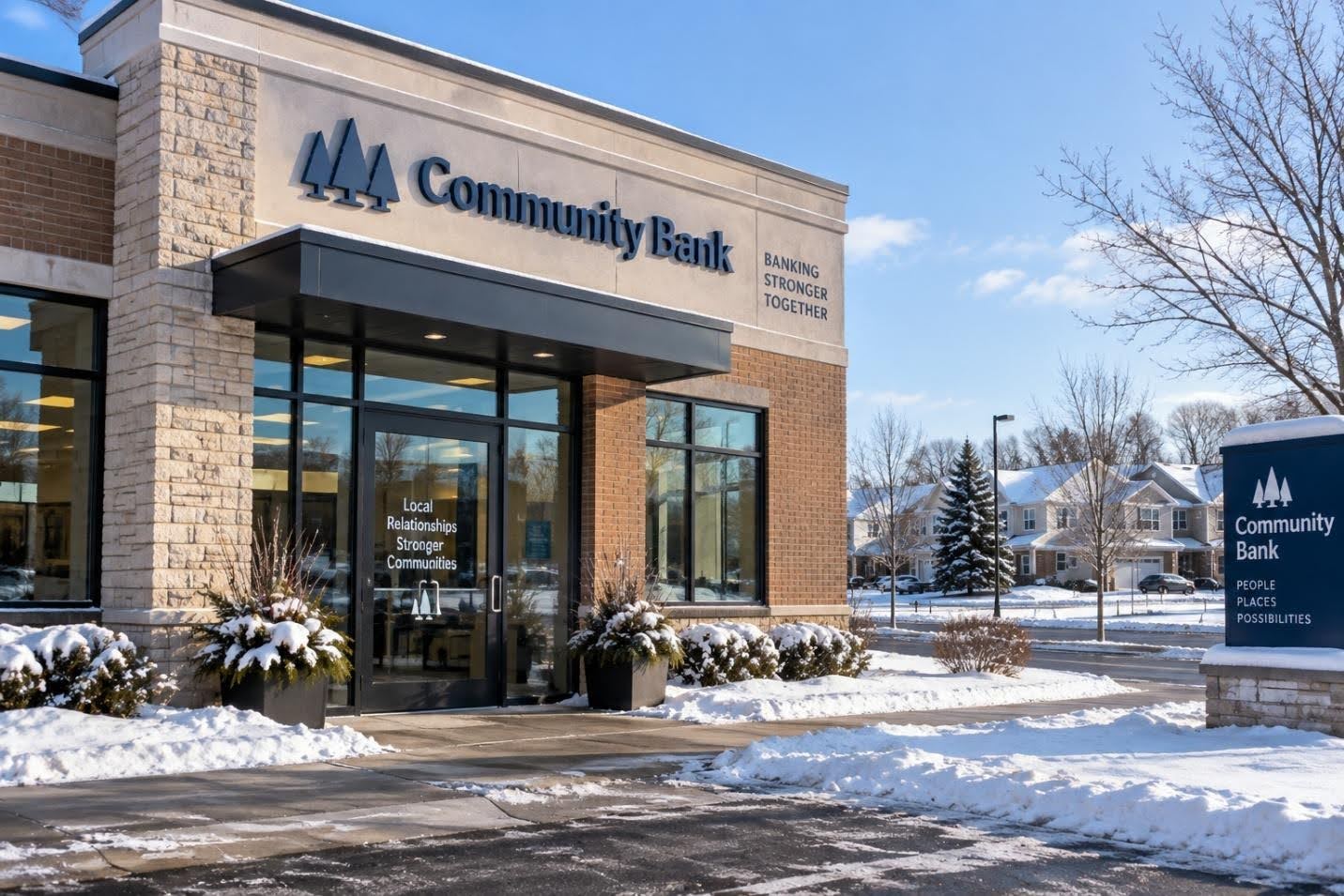
Minnesota HOA boards are responsible for protecting association funds, and that starts with understanding how bank accounts should be structured and how FDIC insurance works. Operating accounts, reserve funds, and special assessment funds each carry different risks, and without proper account setup, your community could have uninsured exposure in the event of a bank failure. This guide walks through what every Twin Cities board member needs to know.
Most HOA boards inherit their banking setup from a prior board or management company and never question it. But the way your accounts are titled, how many banks you use, and whether your reserve funds are properly segmented can mean the difference between full FDIC protection and significant uninsured losses. For Minnesota communities managing anything from a small townhome association to a large master-planned development, getting this right is a fundamental fiduciary responsibility.
Why HOA Bank Account Structure Matters More Than You Think
When a board member thinks about financial risk, they usually think about delinquent dues, unexpected repairs, or a contractor who overbilled. Bank account structure rarely comes up. But it should, because the stakes are real.
The FDIC insures deposits at member banks up to $250,000 per depositor, per institution, per ownership category. For a typical HOA, that means if your association holds $400,000 in a single checking account at one bank and that bank fails, $150,000 is uninsured. In a market like the Twin Cities, where larger planned communities and condominium associations routinely hold substantial reserve balances, this is not a hypothetical concern.
What the FDIC Actually Covers
FDIC insurance covers deposits in checking accounts, savings accounts, money market deposit accounts, and certificates of deposit. It does not cover investment products like mutual funds, stocks, or bonds, even if they are purchased through a bank. For HOAs that have moved reserve funds into investment vehicles for better returns, it is important to understand that those funds sit outside FDIC protection entirely.
For HOA purposes, the association is typically treated as a single legal entity. That means the $250,000 limit applies to the association as a whole at any given institution, not per account. An HOA with a $100,000 operating account and a $200,000 reserve account at the same bank has $300,000 at that institution and $50,000 in uninsured exposure.
Operating Accounts vs. Reserve Accounts: Why They Should Be Separate
One common mistake we see with self-managed boards, and even some boards transitioning from prior management, is commingling operating and reserve funds in a single account. Beyond the FDIC coverage issue, this practice creates accounting headaches and can make it genuinely difficult to know whether reserve funds are being spent down to cover operating shortfalls.
Minnesota HOA best practices, and in many cases governing document requirements, call for separate accounts for operating funds and reserve funds. Keeping them separate makes your HOA financial reports easier to read and audit, simplifies year-end reporting, and gives the board a cleaner picture of the association’s true financial health.
How to Maximize FDIC Coverage for Minnesota HOA Funds
If your association holds more than $250,000 in deposits, you have options. The goal is not to chase the highest interest rate at a single institution but to ensure that every dollar of association funds is protected.
Spreading Funds Across Multiple Banks
The most straightforward approach is to open accounts at more than one FDIC-member institution. Each bank provides its own $250,000 coverage for the association. A community with $600,000 in reserve funds could, for example, hold $200,000 at three separate banks and maintain full FDIC coverage across all of it.
The practical challenge here is administrative. More banks mean more statements, more signatories to manage, more reconciliations, and more risk of something slipping through the cracks. For boards without professional management support, this added complexity is a real burden.
Using CDARS and IntraFi Network Accounts
A more elegant solution that many Twin Cities HOAs are now using is the Certificate of Deposit Account Registry Service (CDARS) or the IntraFi Network, which allows a single bank to place funds across a network of member institutions on your behalf. The association deals with one bank, receives one consolidated statement, and gains FDIC coverage that can extend well beyond $250,000 by spreading deposits across multiple institutions behind the scenes.
This approach is particularly useful for associations with large reserve balances. If your HOA reserve study indicates you need to hold $800,000 or more in reserve funds over the next planning cycle, an IntraFi account can protect that entire balance while keeping your banking relationship simple.
Money Market Accounts and Interest-Bearing Options
Reserve funds sitting idle in a low-yield checking account are a missed opportunity. Many banks offer money market deposit accounts that carry FDIC coverage and pay meaningfully higher interest than standard checking. For a Minnesota HOA holding $300,000 in reserves through a long winter, even a modest interest rate differential adds up over time.
Boards should be careful not to confuse FDIC-insured money market deposit accounts with money market mutual funds, which are investment products and carry no FDIC protection. The names sound similar, but the risk profiles are very different.
Minnesota-Specific Considerations for HOA Banking
Seasonal Cash Flow in Twin Cities Communities
Minnesota communities face a cash flow pattern that communities in warmer climates do not. Snowplowing contracts, ice management, and heating costs for shared facilities front-load expenses from November through March. A board that does not plan for this seasonal spike can find itself drawing on reserve funds to cover operating shortfalls, which is both a bad financial practice and a potential violation of fiduciary duty.
Understanding your seasonal cash flow means keeping a larger operating buffer in liquid, accessible accounts during late fall so that winter vendor invoices can be paid without touching reserves. This is also why budgeting for Minnesota’s weather-driven costs should be a standing agenda item during fall board meetings, not an afterthought.
Special Assessment Accounts
When a board levies a special assessment in Minnesota, the funds collected should go into a dedicated account, not into the general operating account. This keeps the money clearly earmarked for its stated purpose, protects the board against claims of misuse, and makes accounting straightforward when the project is complete and the account is closed.
If a special assessment will generate more than $250,000 in collections, the same FDIC exposure analysis applies. The assessment funds are association deposits and are subject to the same per-institution coverage limits.
Authorized Signatories and Internal Controls
Bank account structure is not just about insurance coverage. It is also about who has access to association funds and what controls prevent unauthorized transactions. Best practices call for dual-signature requirements on checks above a certain threshold, typically $2,500 to $5,000 for smaller associations and higher thresholds for larger ones.
We often see boards with a single authorized signatory on all accounts, usually the treasurer or a management company representative, with no secondary check. This creates unnecessary exposure to fraud or error. Requiring two board member signatures for large disbursements is a simple control that costs nothing and provides meaningful protection.
A Real-World Scenario: The Reserve Account That Almost Wasn’t Protected
A mid-sized townhome association in the southwestern Twin Cities metro had been self-managed for several years before bringing on professional management. During the transition review, it came to light that the outgoing board had consolidated all association funds, operating and reserve, into a single savings account at one community bank. The balance at the time of transition was just over $310,000.
The board had never considered FDIC coverage because the account had always seemed fine. No one had done the math. When the new management team pointed out that $60,000 was uninsured, the board was genuinely surprised. Within 60 days, they had opened a second account at a different institution, moved the reserve funds, and established a proper dual-signature protocol for disbursements above $3,000.
The lesson here is not that something bad had happened. It is that something bad easily could have, and no one on the board would have seen it coming. A mid-year budget review or transition review is an ideal time to audit banking structure alongside the financial statements.
Frequently Asked Questions
1. How much FDIC insurance does an HOA get?
An HOA is treated as a single legal entity for FDIC purposes, which means it receives up to $250,000 in coverage per insured institution, per ownership category. If your association holds more than $250,000 at a single bank, the amount above that threshold is uninsured. Spreading funds across multiple FDIC-member banks or using a network deposit program like IntraFi can extend coverage beyond that limit.lly says.
2. Should HOA operating and reserve funds be in separate accounts?
Yes, and most HOA governing documents require it. Keeping operating and reserve funds in separate accounts prevents accidental or unauthorized use of reserve money for day-to-day expenses, simplifies financial reporting, and makes it easier to track whether the association is meeting its reserve funding goals. It also reduces commingling risk, which can be a compliance issue under Minnesota law and your association’s own documents.
3. What happens to HOA funds if our bank fails?
If your bank is FDIC-insured and fails, the FDIC will cover deposits up to $250,000 per institution. Funds above that limit may be partially or fully lost depending on how the failure is resolved. This is why account structure matters: associations with large balances need to either spread deposits across banks or use a network account program to ensure full coverage. Funds held in non-deposit investment products are not covered by FDIC insurance at all.
4. Does Minnesota law require HOAs to maintain specific types of bank accounts?
Minnesota’s Common Interest Community Act (Minnesota Statutes Chapter 515B) establishes fiduciary duties for board members, which include prudent management of association funds. While the statute does not mandate specific account structures by name, fiduciary duty implies that boards should take reasonable steps to protect association assets, including ensuring proper FDIC coverage. Boards should also review their own declaration and bylaws, which often include more specific requirements about account separation and authorized signatories.d.
5. Who should be an authorized signatory on HOA bank accounts?
Typically, the board treasurer and at least one other board officer are named as signatories. Best practice is to require dual signatures for checks or transfers above a defined threshold, reducing the risk of unauthorized disbursements. If you work with a professional management company, their role in account access should be clearly defined in your management agreement, with board oversight maintained over all significant transactions.
Final Thoughts
Banking structure and FDIC coverage are not the most exciting topics in HOA governance, but they are among the most consequential. A board that keeps all association funds at one institution without checking coverage limits is taking on risk that is entirely avoidable. The fix is usually straightforward: open an additional account, restructure how funds are held, or ask your bank about network deposit options.
If your board is not sure how your current accounts are structured or whether your reserves have full FDIC protection, that is worth finding out before it becomes a problem. EPMI works with HOA boards across the Twin Cities metro to review financial practices, including banking setup, as part of our standard management services. Reach out if you would like a second set of eyes on how your association’s funds are held and protected.