
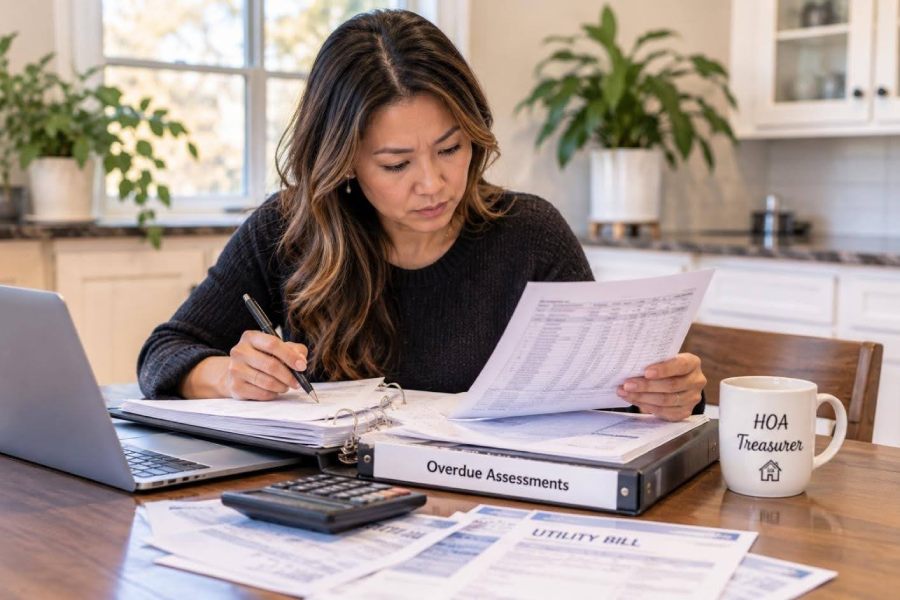
A snow contractor needs payment. The master insurance premium is due. But several homeowners have not paid assessments, and the operating account is running low.
An assessment collection shortfall is a cash-flow problem first and a collection problem second. Boards must protect essential obligations while enforcing a lawful, consistent collection process.
Why a Balanced Budget Can Still Leave the HOA Short of Cash
The annual budget may assume that every owner pays on time. The bank balance reflects what actually arrived. Even a small number of delinquent accounts can create a serious problem in a small townhouse community with large fixed expenses.
Consider a 30-unit association charging $350 per month. If five owners miss three payments, the association is short $5,250, while snow removal, insurance and utilities continue.
Step 1: Build a 13-Week Cash Forecast
Start with the current cleared operating cash balance. Add realistically expected assessment collections, then subtract required payments by due date. Show a weekly running balance.
Prioritize legally required and safety-critical obligations. Do not quietly defer insurance premiums or assume reserves are available to cover routine operations.
Step 2: Separate Timing Problems From Structural Deficits
A timing problem may result from quarterly billing or a few late payments. A structural deficit occurs when the regular assessments are inadequate even if everyone pays.
The solutions differ. A short-term delinquency spike calls for collection management and cash planning. Chronic underbudgeting may require assessment changes, expense restructuring or other authorized funding measures. See How Often Should an HOA Increase Dues? and Five Signs Your HOA Finances Are in Trouble.
Step 3: Follow the Collection Policy Consistently
Use the association’s written policy and the applicable Minnesota requirements. Record notices, owner responses, payment arrangements and referral deadlines. Do not invent accelerated collection steps because the board is under financial pressure.
For the process itself, see HOA Collection Policies in Minnesota and Handling Delinquent HOA Dues in Minnesota. Because Minnesota’s collection requirements are changing, review the SF 1750 changes affecting HOA collections before updating notices.
Step 4: Review Expenses Without Creating Bigger Risks
Look for work that can be postponed without jeopardizing safety, property or contract obligations. Request payment timing adjustments where appropriate and authorized. Avoid canceling essential insurance, deferring critical repairs or withholding vendor payments without communication.
Step 5: Decide Whether Additional Funding Is Necessary
If the forecast still shows a shortfall, the board may need to evaluate assessment increases, a properly authorized special assessment, financing or other lawful options. The declaration, statutes and board authority matter.
Do not automatically borrow from reserve accounts. Doing so can hide the operating problem and undermine planned capital work. See Understanding HOA Reserve Funds.
Minnesota Example: The Insurance Renewal Deadline
A small east-metro condominium association experienced multiple missed ACH payments shortly before its annual master-policy installment. The board has enough money on paper in receivables, but not enough in the bank.
The board should verify the cash forecast immediately, contact the insurance agent about timing and consequences, follow its collection policy, and decide on any lawful funding response. Waiting until the premium is returned unpaid creates avoidable risk.
What the Board Should See Each Month
- Operating cash
- Delinquency aging by account
- Total collections received versus billed
- Payment plans and performance
- Budget-to-actual variances
- Reserve contributions due
- A short written explanation of material cash-flow changes
For a broader view of reporting, read Understanding HOA Financial Reports.
What to Do Next
At the next board meeting, request a cash forecast, delinquency aging and a list of upcoming nondeferrable obligations. Decide who will follow up, which policy applies and when the board will revisit the forecast.
Visit EPMI’s resources for Minnesota HOA boards for additional guidance. If your board is spending its time chasing cash rather than governing the community, learn how Exclusive Property Management Inc. supports financial administration and collections coordination.
When unpaid assessments put essential bills at risk, a consistent system matters. Contact EPMI to discuss professional HOA management.
Frequently Asked Questions
Can an HOA stop paying vendors until delinquent owners catch up?
The board should review contracts, safety obligations and consequences before delaying payments. Unilateral nonpayment can create additional costs and service risks.
Can the HOA use reserve funds to pay insurance or utilities?
Do not assume so. Review the governing documents, reserve purpose, legal authority and long-term consequences before transferring funds.
Can the board increase assessments to cover a shortfall?
Potentially, subject to governing-document and statutory procedures. A structural budget problem may require an assessment adjustment.
Should the HOA offer payment plans?
A consistent, legally reviewed payment-plan policy can help recover amounts owed, but it should not conflict with statutory notices or governing documents.
What is the first report to request when cash is tight?
A short-term cash forecast paired with the delinquency aging and list of upcoming essential bills.