
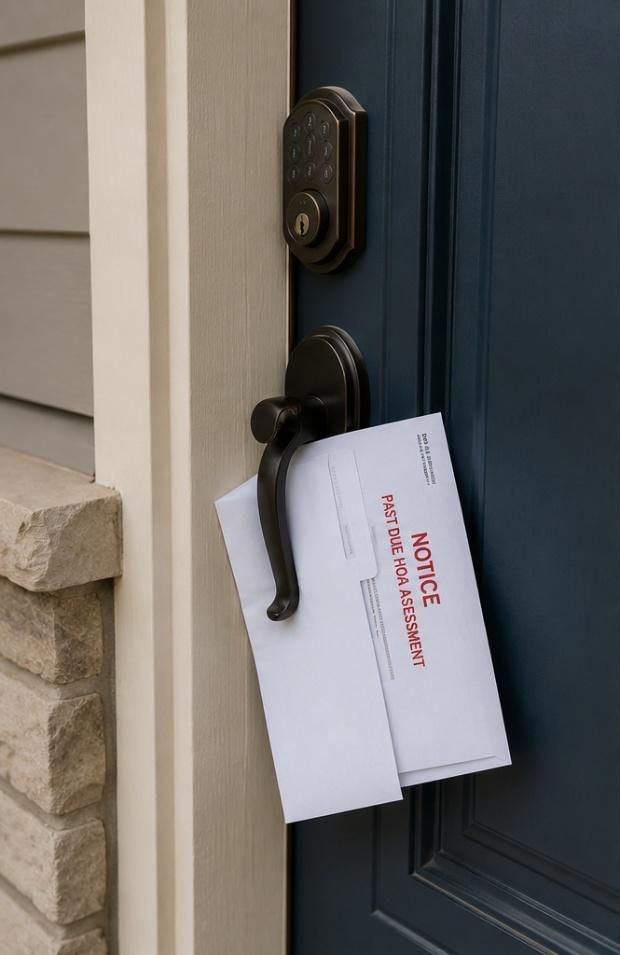
When a homeowner stops paying HOA dues in Minnesota, the board must follow a consistent, documented process that includes timely notices, adherence to the association’s collection policy, and compliance with Minnesota law. Acting quickly, professionally, and fairly protects the association’s finances and reduces the likelihood that one delinquency becomes several.
Delinquent dues are an uncomfortable topic for most board members. Nobody became a volunteer board member to be a bill collector, and most boards genuinely want to work with homeowners going through hardship. But the financial reality is that when one homeowner stops paying, the shortfall is eventually absorbed by every other homeowner in the community. Protecting the community’s finances is not punitive. It is one of the board’s most fundamental obligations.
Why Acting Early Matters
The longer a delinquency goes unaddressed, the harder and more expensive it becomes to resolve. A homeowner who is two months behind is much easier to work with than one who is eighteen months behind, owes accumulated late fees, has had legal costs added to the account, and may now be avoiding all communication with the board.
Early, consistent action benefits everyone, including the homeowner. A prompt notice and a payment plan conversation gives a homeowner who wants to stay current a path to do so. Waiting three months to say anything removes that option and escalates to collections by default.
Step 1: Know What Your Governing Documents Require Before You Act
Before taking any collection action, your board needs to know exactly what your governing documents authorize and require. Review your:
- Declaration: What late fees are authorized? What is the grace period before a payment is considered delinquent?
- Collection policy: Does your association have a formally adopted collection policy? If not, developing one is the first priority.
- Bylaws: Are there any required steps or notice periods before a lien can be placed?
The board’s collection policy is the single most important tool in this process. A well-drafted policy establishes consistent timelines, fee structures, escalation steps, and the point at which accounts are referred to an attorney. Boards that do not have one operate reactively and inconsistently. For a thorough look at what a collection policy should include, HOA collection policies in Minnesota: a practical guide for board members walks through the key components.
Step 2: Send a Timely, Written Notice
As soon as a payment is missed and the grace period has passed, send a written notice to the homeowner. This notice should:
- State the amount owed, including the original assessment and any accrued late fees
- Reference the specific provision in the governing documents that governs late payments
- Provide a clear deadline for payment
- State the consequences of continued non-payment, including lien and collection action
Send this notice by both email and certified mail. The certified mail record is important if you eventually need to demonstrate proper notice in a legal proceeding. Keep copies of everything.
Step 3: Attempt Contact and Consider a Payment Plan
Not every homeowner who misses a payment is trying to avoid their obligations. Job loss, medical issues, and financial hardship are real, and a board that demonstrates good faith by offering a payment plan often recovers more money faster than one that immediately escalates.
If the homeowner responds to your notice, discuss a payment plan. Your collection policy should establish whether payment plans are permitted, for how long, and under what conditions. A standard approach is to allow a plan that brings the account current within 90 to 180 days, with the homeowner remaining current on ongoing assessments throughout.
If the homeowner does not respond, move to the next step on your timeline without delay.
Step 4: Issue a Formal Demand Letter
If the initial notice does not produce payment or a plan, the next step is a formal demand letter, often sent through your HOA attorney. An attorney-generated demand letter signals seriousness, triggers legal timelines under Minnesota law, and is a required step before some collection actions can proceed.
At this stage, the legal costs may begin to accrue on the homeowner’s account, depending on what your governing documents allow. This is worth communicating to the homeowner clearly: the longer this remains unresolved, the more expensive it becomes for them.
Step 5: Record a Lien Against the Property
Under Minnesota Statutes Chapter 515B, associations have the right to place a lien on a homeowner’s property for unpaid assessments. A lien does not immediately force a sale, but it does:
- Attach the debt to the property, meaning it must be resolved before the property can be sold or refinanced
- Establish the association’s legal priority over certain other creditors
- Create a formal record that can support further legal action if needed
Recording a lien requires proper notice to the homeowner and compliance with statutory requirements. This step should be handled by or with the guidance of your HOA attorney.
For a deeper look at the full collections process, including what happens when delinquencies escalate beyond a lien, handling delinquent HOA dues in Minnesota covers the step-by-step framework that protects the association throughout.
Step 6: Proceed to Legal Action if Necessary
If a lien does not produce payment or a negotiated resolution, the board’s remaining options are a lawsuit to obtain a court judgment or, in some cases, foreclosure of the lien. These are significant steps that should only be taken after all reasonable attempts to resolve the delinquency have failed and with legal counsel engaged throughout.
The threshold for pursuing litigation versus writing off a small debt is a business decision the board needs to make, balancing the amount owed against the cost of legal proceedings. Your HOA attorney can help evaluate whether the facts of a specific delinquency make legal action cost-effective.
We often see boards hesitate at this step because it feels aggressive or punitive. But a board that never follows through on enforcement effectively signals to every homeowner that dues are optional, which creates a financial problem for the entire community.
How Delinquencies Connect to the Association’s Financial Health
Individual delinquencies have a real impact on association finances. A community with five or ten percent of units delinquent will feel it in cash flow, in the ability to fund maintenance, and potentially in the reserve fund. Boards that track delinquency rates as part of their regular financial reporting are better positioned to catch trends before they become crisis.
Reviewing the signs that financial stress is accumulating in your community is worth doing alongside any collections process. 5 signs your HOA finances are in trouble identifies early warning indicators that collections issues often travel alongside. And if your community is considering a special assessment to address a funding gap, the process for doing that fairly connects directly to the financial pressures that delinquencies create.
A Real-World Scenario: The Two-Year Delinquency That Was Avoidable
A small condominium association in the Twin Cities discovered that one unit had been delinquent for nearly two years. The board had sent one notice early on, received no response, and then struggled to agree internally on the next step. Some members felt uncomfortable escalating. Others were unsure of their legal authority. Nothing happened for eighteen months.
By the time the board engaged their HOA attorney, the homeowner owed over $6,000 in assessments, late fees, and accrued interest. The attorney placed a lien and eventually recovered the full amount at closing when the homeowner sold, but the association had carried the cash flow shortfall for nearly two years and spent substantially more in legal fees than they would have if they had followed a consistent timeline from month one.
The lesson: hesitation does not protect the homeowner. It just transfers the cost to every other homeowner in the community. A clear collection policy and a consistent timeline are the most compassionate tools available, because they force resolution before the debt becomes unmanageable.
Frequently Asked Questions
1. How long can a Minnesota HOA wait before taking collection action?
There is no single state-mandated timeline, but your governing documents and collection policy should define it. Most collection policies trigger a late fee after a grace period of 15 to 30 days and escalate to a formal demand letter within 60 to 90 days of non-payment. Waiting longer than 90 days without action is generally not in the association’s interest.
2. Can a Minnesota HOA foreclose on a home for unpaid dues?
Yes, under certain circumstances. Minnesota law gives associations the right to foreclose a lien for unpaid assessments, but this is a significant legal process with specific notice requirements and timelines. Foreclosure is typically a last resort pursued only after all other collection efforts have failed.
3. Does a Minnesota HOA have to offer a payment plan?
Most associations are not legally required to offer payment plans, but your collection policy may require the board to consider one. Payment plans are often the most practical way to recover the full amount owed while avoiding the expense of litigation.
4. What should the board do if a delinquent homeowner claims financial hardship?
Boards can and should consider hardship when evaluating payment plans, but hardship does not waive the obligation to pay assessments. The board’s fiduciary duty runs to all homeowners, not just those experiencing difficulty. A reasonable payment plan that acknowledges hardship while protecting the association’s financial position is usually the best resolution.
5. Can a homeowner sell their property if they owe unpaid HOA dues in Minnesota?
The unpaid dues do not prevent a sale, but the lien attached to the property must typically be satisfied at closing. The title company will identify any outstanding HOA liens during the title search, and the seller will generally be required to pay them off before or at closing.
Final Thoughts
Delinquency management is not the most enjoyable part of HOA governance, but it is one of the most important. Boards that act promptly, follow a consistent policy, and treat homeowners fairly throughout the process protect their community’s finances and reduce the tension that prolonged disputes create.
EPMI helps Minnesota HOA boards manage collections with consistent policies, professional communication, and the right legal resources when needed. If your board is dealing with a delinquent account or wants to formalize your collection policy, we are here to help you work through it.