
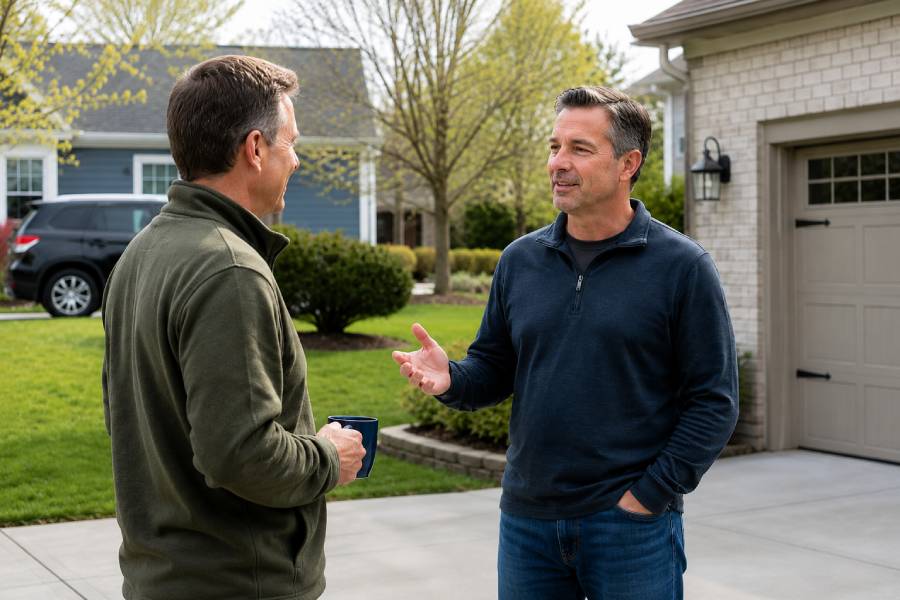
HOA dispute resolution in Minnesota typically follows a structured process: informal outreach, written notice, a formal hearing, and, if necessary, mediation or legal action. Boards that handle conflicts through a consistent, documented process protect both the community and themselves from escalation.
Summer brings longer days, more time outdoors, and more opportunities for neighbors to get on each other’s nerves. Whether it is the fence that went up two inches over the property line, the late-night gatherings on a shared patio, or the ongoing disagreement about who is responsible for a stretch of hedge between two units, HOA boards in Minnesota spend a significant portion of the warm-weather months navigating neighbor conflicts. The good news is that most disputes can be resolved before they become expensive or bitter, provided the board has a process and follows it.
The Cost of Getting Dispute Resolution Wrong
Before getting into what good dispute resolution looks like, it is worth being clear about what happens when boards handle conflicts badly. The most common failure mode is not cruelty or bad faith; it is inconsistency. A board that responds quickly to complaints from some homeowners and slowly or not at all to others will find itself accused of favoritism, and those accusations will quietly undermine every enforcement action the board tries to take.
The second most common failure is escalation by avoidance. When boards delay addressing a legitimate complaint because the conversation feels uncomfortable, the homeowner who filed the complaint grows frustrated, the neighbor who is the subject of the complaint does not change their behavior because they have not been told there is a problem, and what might have been resolved with one conversation turns into a six-month standoff.
Minnesota HOA laws that every board should know include specific requirements around due process, notice, and hearings. Boards that skip those steps because a situation seems straightforward can find themselves in a much more complicated legal position later.
The Dispute Resolution Framework Minnesota Boards Should Use
A functional dispute resolution process has several recognizable stages. Not every conflict will need to go through all of them, but having the full framework in place means the board can meet any dispute at the appropriate level.
Stage 1: Informal Outreach
Many conflicts can be resolved at the neighbor level without any formal board involvement, provided the community has a culture of direct, respectful communication. Some associations include language in their welcome materials that encourages homeowners to speak directly with neighbors before filing a formal complaint. This does not always work, and boards should never require homeowners to attempt informal resolution before accessing formal processes, but it is worth encouraging as a first step.
When a homeowner does file a complaint, the board or management company can often facilitate a brief, low-stakes conversation between the parties that resolves the issue without formal action. This requires a neutral, calm facilitator and a willingness from both parties to engage in good faith.
Stage 2: Written Notice and Response Period
If informal outreach does not resolve the issue, the next step is a written notice to the homeowner whose conduct or property condition is the subject of the complaint. The notice should describe the specific concern, cite the relevant governing document provision, and give a clear response period, typically somewhere between seven and thirty days depending on the nature of the issue.
One common mistake boards make at this stage is writing notices that are vague about what resolution looks like. A notice that says “please address the ongoing situation” leaves the homeowner uncertain about what exactly they need to do. A notice that says “the recreational vehicle parked in your driveway must be moved to an approved location within fourteen days per Section 4.2 of the CC&Rs” gives the homeowner a specific, actionable path to compliance.
Stage 3: Formal Hearing
If the written notice does not produce resolution, most HOA governing documents provide for a formal hearing before the board or a designated committee. The homeowner who is the subject of the complaint should receive advance written notice of the hearing, a description of the alleged violation, and an opportunity to present their perspective before any penalty is imposed.
HOA board member responsibilities include conducting these hearings fairly, which means genuinely listening to the homeowner’s response rather than treating the hearing as a formality before a predetermined outcome. In some cases, a hearing will surface information that changes the board’s understanding of the situation. The homeowner whose car appears to be parked in violation of the rules may have a valid medical accommodation request. The neighbor whose fence appears to be over the property line may have a survey that shows otherwise.
Stage 4: Mediation
For disputes that involve genuine disagreement between two homeowners rather than a clear violation of community rules, mediation can be a powerful tool. A neutral third-party mediator helps the parties communicate more effectively and work toward a solution that both can accept.
Minnesota has several community mediation programs that offer low-cost or free services to HOAs and homeowners. Boards that proactively suggest mediation for neighbor-to-neighbor conflicts often find that it resolves issues faster and with less lasting damage to community relationships than formal enforcement would have. Understanding the difference between the HOA board and a property management company is relevant here because management companies can help boards identify appropriate mediation resources and facilitate the referral.
Stage 5: Legal Action
Legal action is the last resort, and most disputes should never reach it. Situations that may require legal intervention include persistent violations after exhausting the formal enforcement process, significant property damage disputes, or conflicts that involve threats or safety concerns.
Before pursuing legal action, boards should consult with an HOA attorney. The cost and community impact of litigation are significant, and an attorney can often help the board identify alternative paths that have not yet been tried.
Common Types of Disputes in Minnesota HOA Communities
While every community is different, certain categories of conflict come up consistently in Minnesota associations.
Noise and nuisance complaints tend to spike in summer when outdoor gatherings are more frequent and windows and doors are open. Rules about quiet hours, outdoor amplified sound, and the use of shared outdoor spaces are among the most commonly enforced provisions during the warm months.
Property maintenance disputes, including the landscaping conflicts discussed in HOA landscaping rules every Minnesota association needs to know, often surface between neighbors who share a property line or a view of each other’s yards.
Parking conflicts are perennial in HOA communities, especially in townhome associations with limited guest parking. Clear parking rules and consistent enforcement are the most effective long-term solution, but the process for addressing individual violations still needs to follow the dispute resolution framework.
Pet-related complaints about dogs off-leash, waste not being picked up, or animals being aggressive toward neighbors or other pets are common in communities with shared green spaces, particularly during summer.
Assessment collection disputes sometimes have a conflict component when a homeowner believes a fee or fine was improperly assessed. The HOA collection policies in Minnesota that govern how associations pursue delinquent accounts should include a clear appeal pathway for homeowners who believe charges were assessed in error.
A Real-World Scenario
A Minnesota association managing a mix of single-family homes and townhomes was dealing with a dispute between two neighbors that had been simmering for over a year. One homeowner claimed the neighbor’s fence partially blocked a drainage swale and was causing water to pool in her yard during heavy rains. The neighbor insisted the fence had been installed with board approval and that the drainage issue predated it.
Both homeowners had filed multiple complaints with the board, and the board had responded to each one individually without addressing the underlying relationship. By the time the management company became involved, the neighbors had stopped speaking, and one had threatened to contact an attorney.
The management company recommended mediation through a local community program. The mediator met with both parties separately and then together over two sessions. It emerged that both homeowners had legitimate concerns: the fence had in fact been approved, but the drainage issue was real and predated the fence by several years. The association had deferred a drainage repair that had contributed to the problem.
The outcome was a jointly agreed plan: the association committed to a timeline for the drainage repair, and the fence owner agreed to a minor modification to improve water flow. Neither party got everything they wanted, but both felt heard. The board also learned that a deferred maintenance item had become a community relations problem, a dynamic that comes up more often than boards expect.
How a Management Company Can Help
Boards are made up of volunteers who live in the community. That proximity is one of the things that makes board governance meaningful, but it also makes conflict resolution genuinely difficult. A board member who has to vote on a complaint filed by their neighbor three houses down is in an uncomfortable position regardless of how fairly they try to act.
A professional management company creates useful distance. When a homeowner receives a notice from the management company rather than from the board president they see at the mailbox, the process feels more official and less personal. Management companies also bring experience with hundreds of similar situations, which means they can help boards avoid common escalation mistakes and identify resolution paths that volunteer boards may not know about. What a property management company actually does for an HOA includes this kind of ongoing conflict management support.
Frequently Asked Questions
1. What is the proper process for handling an HOA complaint in Minnesota?
The process typically starts with a written complaint to the board or management company, followed by the board reviewing the complaint and sending written notice to the subject homeowner, giving a response period. If the issue is not resolved, a formal hearing is scheduled. Minnesota law requires that homeowners receive notice and a hearing opportunity before fines are assessed, so skipping those steps creates legal exposure for the association.
2. Can a Minnesota HOA force two neighbors to go to mediation?
Most HOA governing documents do not give the board authority to compel mediation between private parties. However, boards can strongly encourage mediation, can facilitate a referral to a community mediation program, and can condition their own involvement in a dispute on the parties first attempting mediation. Some associations have added mandatory mediation provisions to their governing documents as an amendment, which is worth considering if neighbor disputes are a recurring issue.
3. What should a Minnesota HOA board do if a homeowner makes a complaint about a board member?
Complaints involving a board member should follow the same process as any other complaint, but the board member in question should recuse themselves from any vote or decision related to the matter. If the board lacks a quorum without that member, or if the conflict is significant enough to compromise the process, engaging a management company or HOA attorney to help manage the process is a reasonable step.
4. How long does HOA dispute resolution typically take in Minnesota?
Simple disputes resolved informally can take a matter of days. Formal enforcement processes involving written notice, a response period, and a hearing typically take four to eight weeks from first notice to resolution. Disputes that proceed to mediation or legal action can take several months or longer. The single biggest driver of timeline is how quickly the board responds to complaints and whether the process is followed consistently.
5. Can a homeowner sue their HOA in Minnesota for not resolving a dispute fairly?
Yes, homeowners can pursue legal action against an association for failure to enforce governing documents or for enforcement actions taken in a discriminatory or procedurally improper way. This is one of the strongest reasons to maintain a consistent, documented dispute resolution process. Boards that treat similar violations differently depending on who is involved face real legal risk.
Final Thoughts
Conflict is a normal part of community living, and the goal of a good dispute resolution process is not to eliminate it but to handle it in a way that preserves relationships, applies rules fairly, and keeps small disagreements from becoming long-term problems. Minnesota HOA boards that invest in clear processes, consistent follow-through, and a willingness to use mediation when appropriate will find that most disputes resolve without lasting damage to the community.
If your board is navigating a difficult dispute or wants to build a more consistent enforcement framework before the summer season peaks, EPMI is here to help. We work with Minnesota associations of all sizes on exactly these challenges, and we bring both process knowledge and practical experience to every situation.